Engineering
We analyze well data, pick the FRS configuration, and forecast the outcome. We don't guess — we run the numbers.
T&D modeling
Torque-and-drag modeling for candidate wells.
Configuration
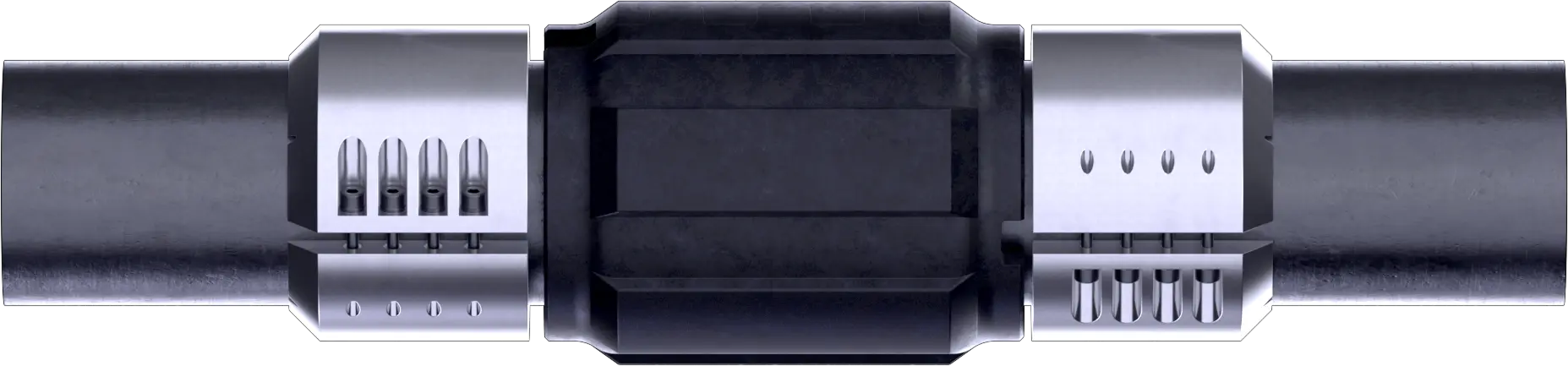
FRS sizing, count, and placement.
Field support
We're on site during the run.
Operations report
Result on record — before vs after.
Full cycle — from candidate well to a verified result report.
Four steps that take complex runs from forecast to delivery.

T&D modeling
We model torque and axial load for the specific well. Free for qualified candidates.

FRS configuration
We define sizing, count, and placement intervals for the calculated profile.

Field support
We're on site during the run. Tracking placement, logging parameters.


Operations report
Fact vs forecast — before and after data, one document.
We work wells where friction is the operational risk.
- DLS TYP. 3-6°/30M
ERD — horizontal sections
Horizontal sections 1,500–3,500 m. Friction stacks up; without FRS the torque blows past the limit well before TD.
- WOB LOSS TYP. 30-50%
Drilling with motor
Getting axial load down to the bit is critical. High friction in the lateral kills WOB to the BHA — and ROP with it.
- up to -15 t on POOH
Hook load on POOH constraints
Getting axial load down to the bit is critical. High friction in the lateral kills WOB to the BHA — and ROP with it.
- DLS > 4°/30M
High wellbore curvature
High curvature multiplies normal load on the wellbore wall — tool wear, torque loss.

Run the numbers on your well
Send your well data and constraints — we'll run T&D modeling and come back with a configuration and the expected impact.